2023.11.15
Report: Prices are not transparent, affecting plastic recycling industries in India, Indonesia, Thailand and Vietnam!
Page view:1010
The lack of transparency in the price of waste plastic raw materials and recycled plastics in India, Southeast Asia, has led to fluctuating demand and supply, and low capacity utilization of recycling facilities, which ultimately poses challenges for brands to fulfill their commitments to recycled materials in plastic packaging. Price data is crucial, and in the absence of data, the targets set by brands and other buyers of recycled plastics will become detached from the market.
Recently, The non-profit organization The Circulate Initiative and its research partner Anthesis Grou released their report, Price Transparency in Recycled plastic Supply Chains in India, Indonesia, Thailand, and Vietnam, which explores the positioning of the prices of these four recycled plastics and the impact of policies. Such as EPR, bottle deposit system, lower recycling content regulations, plastic taxes, etc. By providing comprehensive insights, stakeholders across the value chain can better understand potential market opportunities and make more informed decisions to drive positive growth in the plastics recycling industry.
Price transparency in the recycled plastics supply chain
The study focused on core players in the recycled plastics supply chain, including collectors, balers, sorters, and recyclers. The recycled plastics categories covered include rPET, rHDPE, rLDPE and rPP, and the data points collected and analyzed include recycled plastic volume, cost and profit, and price.
It is estimated that there are more than 7,500 registered or unregistered recyclers in India who collect about 60% of plastic waste for recycling, about 70% of the material is recycled in formally registered recycling infrastructure, 20% is recycled in unregistered informal infrastructure and the remaining 10% is recycled in the smaller informal sector.
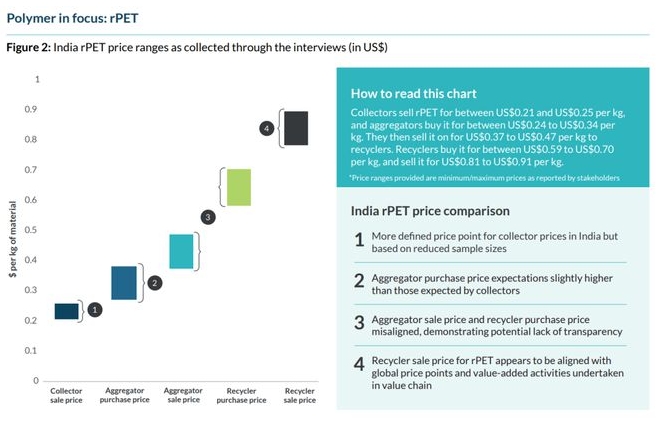
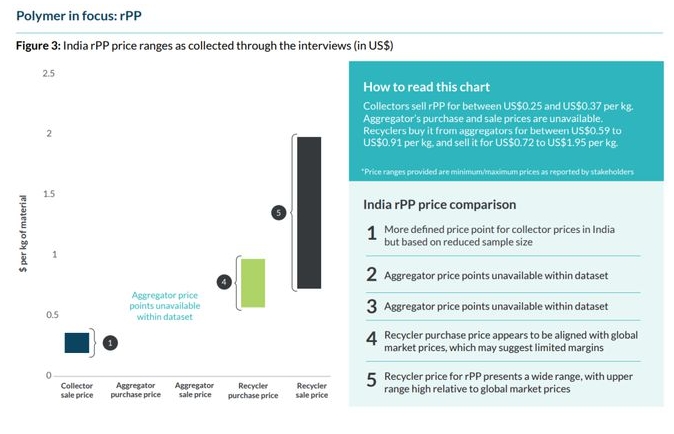
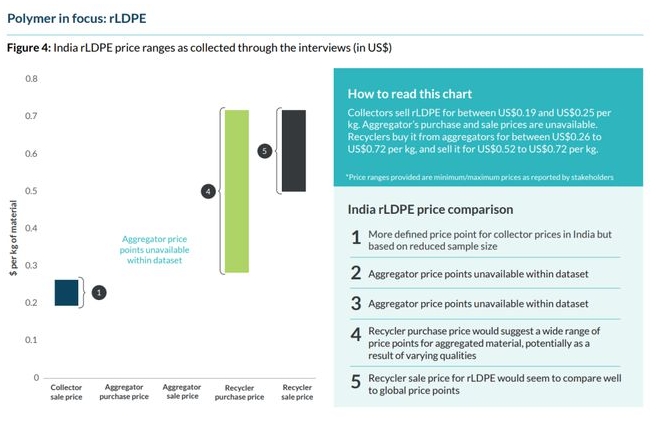
The above chart shows the prices of the recycled plastics supply chain in India. The report also includes data and analysis for Indonesia, Thailand and Vietnam.
From pricing data collected by the study, the final selling price of $850 to $1,000 per tonne offered to buyers by Indian recyclers is well in line with global pricing expectations of $900 to $1,500 (ApRil-September 2024 Asian rPET price point). This allows buyers to obtain PET raw materials on the domestic market. The data also shows that Indian recyclers are willing to pay more than the higher prices offered by packaging stations.
The study notes that profits from plastic recycling tend to be concentrated at the recycler level, with less money flowing to collectors, many of whom are informal sector workers. The report points out that recyclers have higher fixed and operating costs, often face greater financial risk among stakeholders, and therefore need to make adequate profits.
"However, if we are to dramatically increase plastic recycling, the share of total profits flowing through the value chain, particularly to informal workers, without whom many would have no supply of recycled plastic and, in turn, brands could meet their recycled content targets, needs to increase," the report said.
Policy and its impact on price transparency
The report also assesses the impact of selected policy interventions, such as extended producer responsibility (EPR), deposit return systems, lower recycling content requirements, formalization of collection systems, native plastic taxes, etc., on the amount of waste plastic collected and recycled, as well as the potential distribution of profits across the supply chain, with a specific focus on how to improve the flow of profits to waste workers.
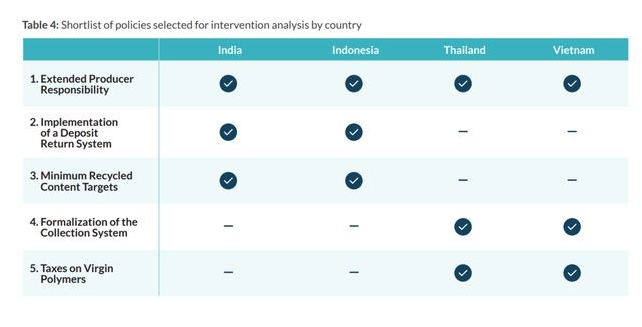
The report notes that due to market imbalances, not all policies are effective in raising prices across the value chain and stimulating higher recycling rates. For example, policies aimed at increasing the value of PCR or stimulating investment in regenerative infrastructure help recyclers, but do not necessarily translate directly into higher prices paid to collectors.
What is needed, the researchers conclude, are "additional practical interventions to support knowledge sharing within the marketplace." These could involve digital traceability of plastics, published market price points, and greater involvement of industry bodies and regulators in standardising material specifications. The benefits of growing market demand and potential price increases for recycled materials need to be distributed through the value chain to provide the right economic signals to stimulate local investment."
Previous:The market potential of recycl...
Next:The breaker of the plastic cir...