2023.12.08
What's next for garbage sorting? It is to turn waste into treasure, and it is to use garbage as resources.
Page view:895
What's next for garbage sorting? It is to turn waste into treasure, and it is to use garbage as resources.
Plastic recycled shoes and clothing fabrics, plant straw recycled home panels, textile recycled car interior... In fact, almost all recycled materials have a complete supply chain in China, but they are also facing the same demand: more accurate and more efficient waste classification.
As a new fashion, garbage classification is not only a way of life and an attitude expression, but also needs to rely on circular economy to form a closed loop of consumption and production. Therefore, from the sustainable consumer market and recycling enterprises to look at waste classification, we may find more inspiration.
Recycled goods, who's paying for them
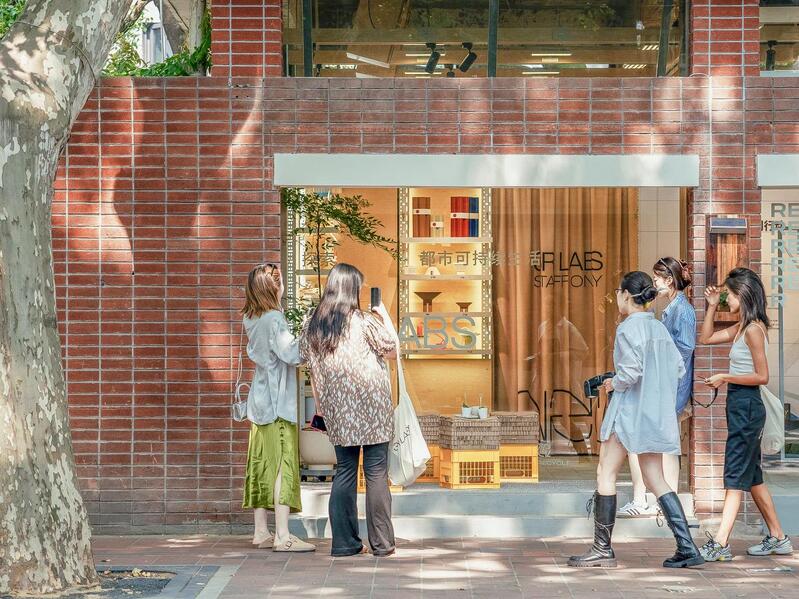
On June 10, the Baoqing Road in Xuhui District was crowded with people at a store called 3rlabs, a commercial space specializing in sustainable consumer goods in Shanghai. The three R's in the name are short for the three principles of the circular economy - reduce, reuse, and recycle.
On the left side of the store's entrance, an installation called "Green Barrier" draws attention. In a green grid, painted plastic waste is piled together to form a "green wall", which attracts many young people to stop and take photos.
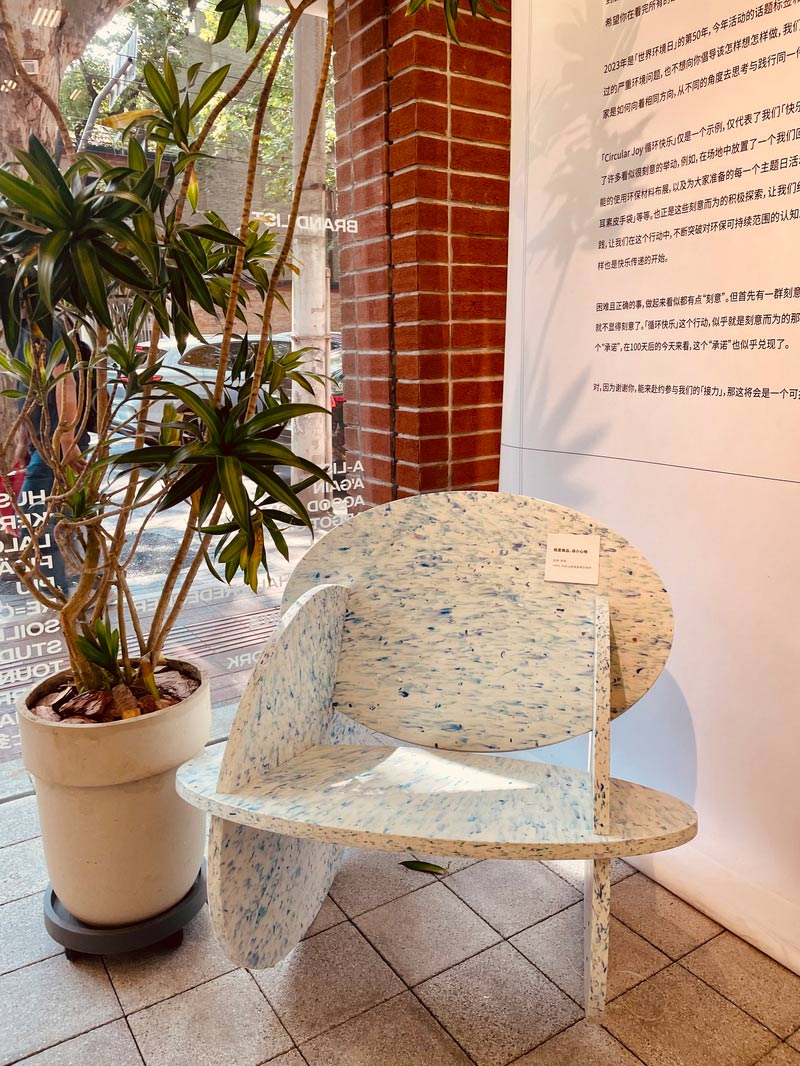
Next to this "green wall" is a strange chair with a white background mixed with a well-defined blue pattern, which is very beautiful in design. The chair, from a Shanghai brand called Suyu, is made of discarded plastic.
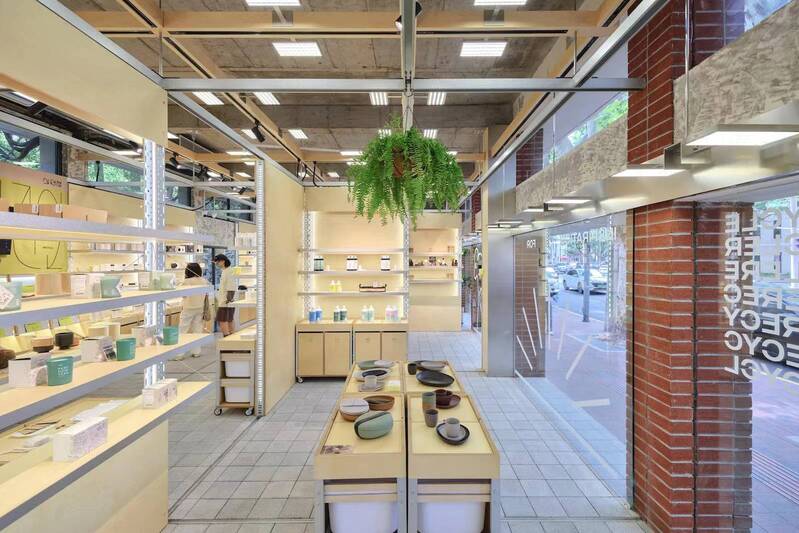
3rlabs brings together more than 30 sustainable brands at home and abroad, covering various fields such as home life, accessory bags, fragrance care and so on. Among them, China's local sustainable brands account for about one-third.
On the shelves, there are colorful patterned tote bags made of recycled nylon from the US brand baggu, pla vases made of plant sources from argot in Paris, France, and scented bags made of recycled coffee grounds from a 'Gain in Shanghai
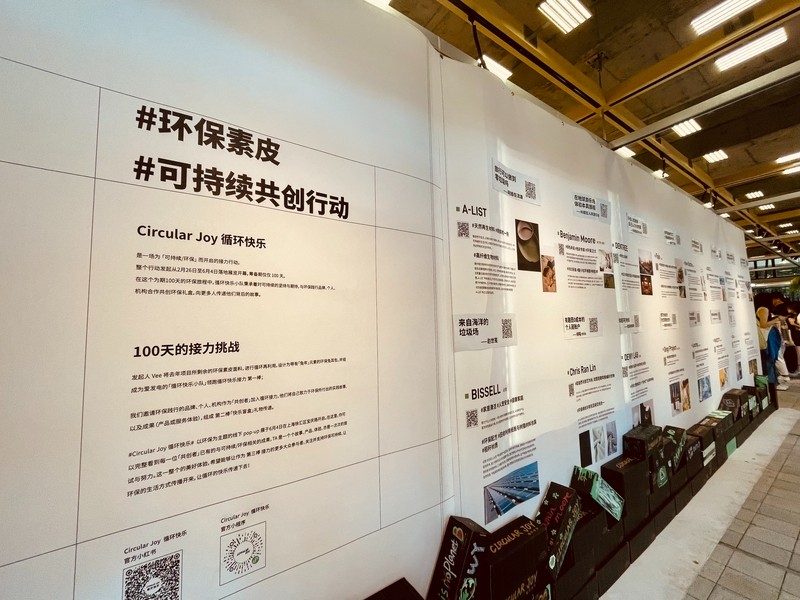
On the other side of the merchandise area, movable shelves separate a separate display area, presenting the 100 sustainable projects in China excavated by Circular Happiness and the stories behind them. In the future, it will also continue to provide inspiration and inspiration for sustainable consumption.
For 3rlabs, space means more than just "selling goods." The brand manager said that it is its long-term goal to let the concept of sustainable consumption enter people's lives, cultivate more local sustainable brands, and let people truly feel the significance and value of buying "3r" products.
Although the products in the store do not have a clear price advantage, the revenue after the opening is in line with expectations, and many young consumers are expressing their recognition of the concept of sustainable consumption.
"This week, our best seller was a French brand that uses 3d printing technology to make vases, candlesticks and lamps from recycled food packaging or plastic. Several products are currently out of stock due to their unique shapes and bright colors." The presiding officer told reporters.
In Europe, long-standing waste sorting systems have spawned mature sustainable consumer markets, which make them highly competitive in product development and demand matching.
According to the French "Le Monde" data, nearly half of the French people will systematically classify external packaging, and these waste packaging will become plastic, cardboard, metal, glass bottles and other primary materials after reprocessing, and then re-enter the market after design and production.
In contrast, domestic sustainable consumer brands are generally established for a short time, and the sustainable materials used in their products are single, and there is still a lot of room for improvement in product design and category richness.
Reporters randomly interviewed several consumers who came to 3rlabs and found that consumers' willingness to pay for "sustainability" largely depends on whether the recycled material is unique or whether the recycled technology has a bright spot.
vivian purchased two pairs of socks from the Chinese brand piu, and her concern was that the source of the socks was corn fiber. zeo bought a shopping bag made of recycled fabric, which is made of recycled nylon to make the bag more durable.
"In a way, every consumer of sustainable products is empowering green brands to innovate and grow." Said Lisa, an investor who has long focused on sustainable consumer goods. When China's sustainable consumption gradually replaces the traditional "rapid consumption" model, the green transformation at the production end forced by consumption will soon occur, and the change in production will inevitably further promote the development of green consumption, which will be a positive cycle.
The appearance and price of recycled goods actually depend on the upstream supply chain of recycled materials.
On June 3, Shanghai sustainable lifestyle platform "Tongsheng" held an exhibition titled "Sustainable Fashion", which also served as an order meeting, with a variety of environmentally friendly recycled fabrics on display for buyers to look at.
With the continuous development of the domestic supply chain, recycled fabrics have been able to achieve no difference with traditional fabrics in texture, touch and pattern. "This dress is made of recycled plastic, but when you touch it, it's soft and breathable," Xiao Yang, head of the company's materials department, told reporters, pointing to a fluorescent green vest.
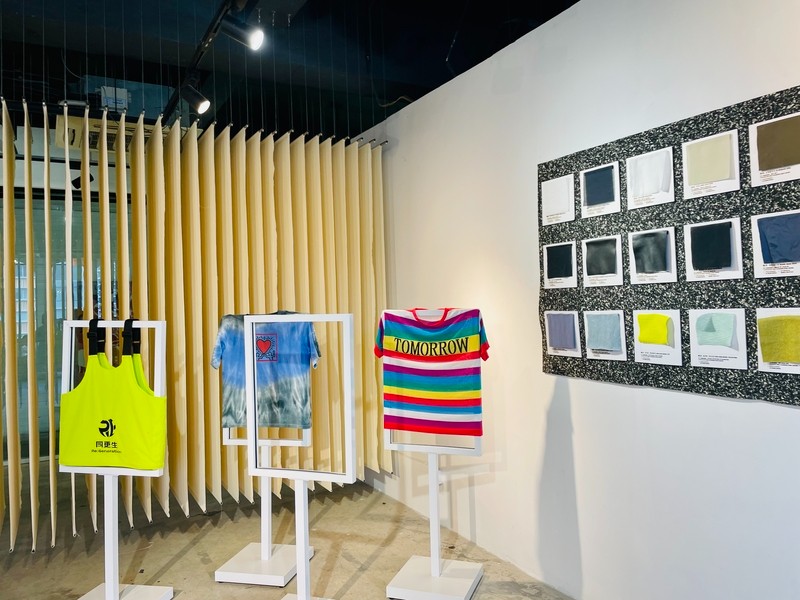
Xiao Yang told reporters that at present, there are two groups of people who have the intention to purchase environmentally friendly fabrics, one is a multinational company with esg indicators, and the other is an emerging brand with environmental protection concepts.
Fabrics made from recycled plastic particles are popular at the exhibition. A purchaser told reporters that China's recycled plastic particles supply chain is perfect, the price is stable, and the recycled fabrics derived from it are diverse in form and color; In addition, compared with textile waste recycled fabrics, it will be more powerful in transmission, and compared with fruit peel recycled fabrics, it is cheaper.
Recycled materials, where they come from
So where do these plastic particles come from?
In Shanghai Fengxian Yingke renewable environmental protection exhibition hall, a European buyer knocked on the "marble" column in the exhibition hall, he was surprised to find that the outer layer of the column is made of plastic. Here, wooden floors, bamboo and rattan panels, sound absorbent cotton in the recording studio... almost all materials that can be seen every day are "changed" from recycled plastic.
They're recycled plastic particles before they transform.
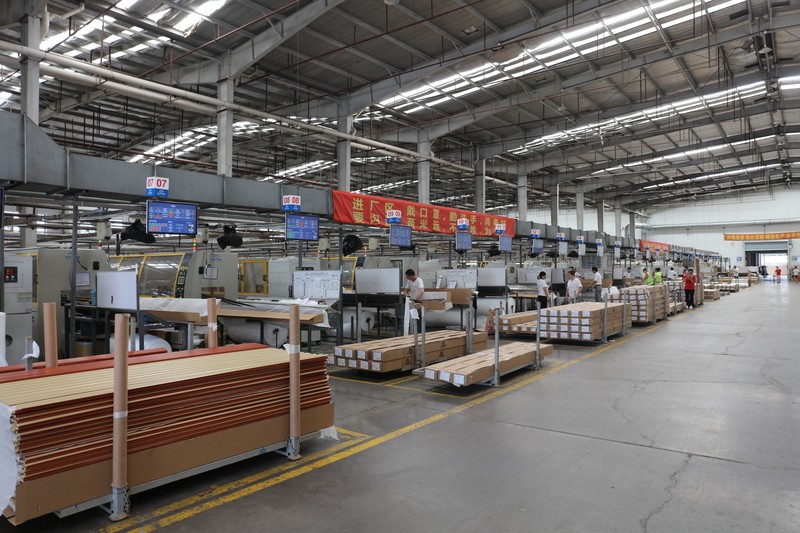
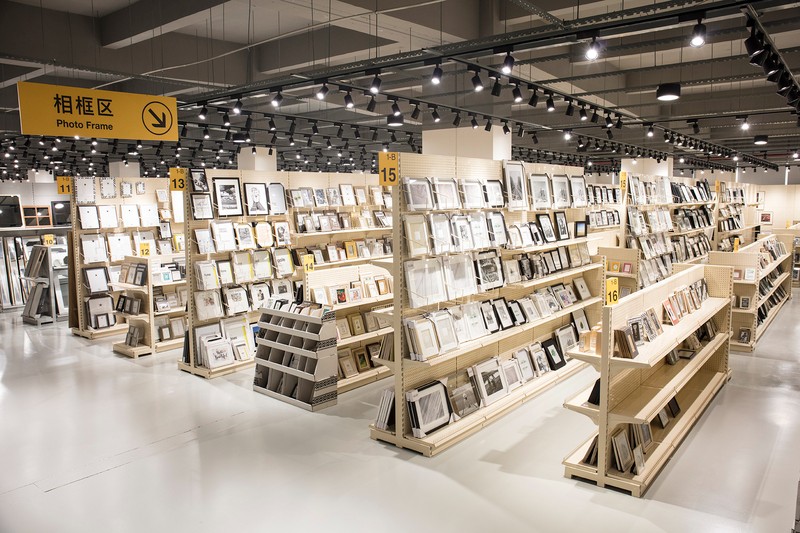
Opposite the exhibition hall, is the production line of Inco regeneration. On weekday afternoons, the production workshop is in full swing. After melting the recycled plastic particles at high temperature, they flow into different molds to form one body. Workers only need to sort out and pack the recycled panels at the last link, and the plastic particles are processed into environmentally friendly picture frames or decorative materials and returned to the market.
In fact, recycled plastic particles are very widely used, not only can be used to make environmentally friendly picture frames, textile fabrics, but also can become furniture panels, packaging boxes, office stationery, electronic product shells and so on.
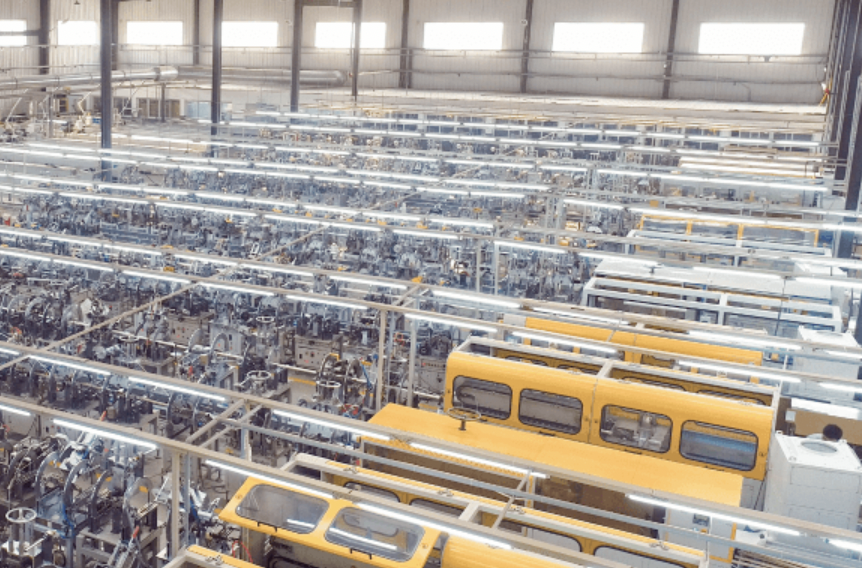
There are two main sources of recycled plastic particles, discarded plastic foam and beverage bottles. It is reported that Yingke recycling has the capacity to process about 150,000 tons of waste plastics every year, and these waste plastics become recycled plastic particles after recycling and processing, some of which become raw materials for other recycled products of Yingke, and some are sold to downstream recycling enterprises.
However, for recycling enterprises, the difficulty of recycling waste plastics is greater than ordinary people think.
In life, people often refer to all kinds of plastic products as "plastic", but in the eyes of recycling enterprises, the classification of plastics is very detailed.
Take a beverage bottle as an example, the plastic used for the bottle cap is pe or pp, the material of the bottle is generally pet, and the material of the label is generally pvc, the molecular structure of the three kinds of plastics is different, in the recycling process can not be mixed together, otherwise it will affect the performance of recycled plastics.
In addition, the use of plastics is diverse and complex, and there are more than 100 kinds of plastics in more than 10 different categories on the market. This means that the precise classification of a single category, plastics, is a considerable cost.
In addition, plastic is also easy to be polluted, plastic surface coating, self-adhesive, paper, metal, wood and other impurities will make the utilization rate of plastic greatly reduced. At the recycling stage, the odor removal of plastics and the cleaning effect of contained substances are also very high.
For example, plastic paper that uses ink to print brand logos or slogans, and plastic bottles that use dye will become unrecyclable because of "pollution" from other substances.
Therefore, only let the production end and the recycling end communicate with each other, effectively connect, and form the whole industry chain of "recycling-regeneration-utilization" in order to better improve the green cycle efficiency.
In fact, the quality and output of recycled plastic particles directly determine the development of recycling enterprises. In terms of waste plastic recycling, in order to reduce the cost of plastic transportation and storage, Ingke Recycling has developed a plastic capacity reduction machine, which can compress plastics to 1/50 and 1/90 of the original volume. In order to separate residues from discarded plastics, cleaning and recycling systems and wringing machines have also been developed.
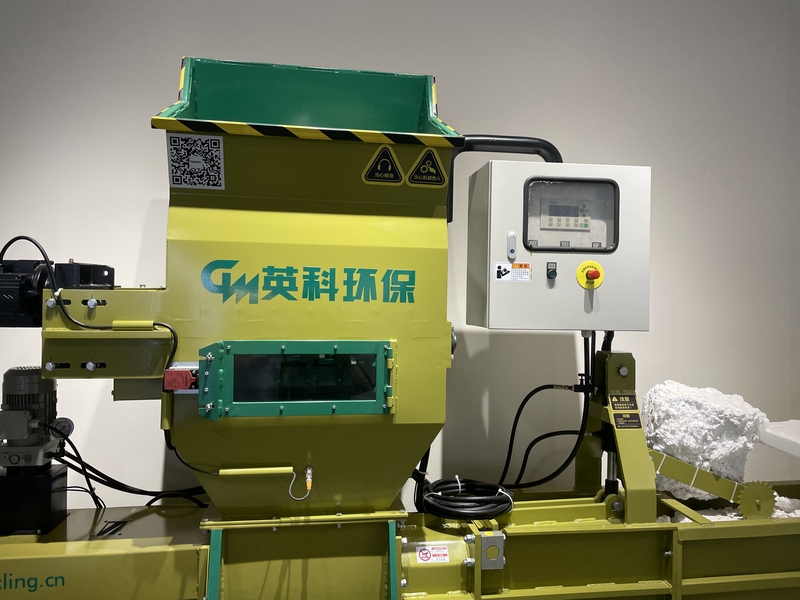
These waste sorting devices help more than 400 recycling points in more than 50 locations around the world to significantly improve recycling efficiency and reduce recycling operating costs. With the advancement of scientific and technological innovation and the emergence of scale effects, the average unit price of recycled particles can be 20%-50% lower than that of new materials, which also makes Yingke's recycled plastic particles have a higher cost performance.
However, it is unexpected that the proportion of waste plastic recycled from China is not high. The assistant chairman of Yingke Recycling told reporters that there are still problems in China's plastic recycling.
First, the overall numbers are small. Although in the government-led two-network integration project, the foam capacity reduction and densification machine of Yingke regeneration has laid out a number of garbage classification pilot cities, compared with the huge volume of plastic waste in the whole of China, the recycling amount of the network is still small, which is not conducive to large-scale recycling.
Secondly, the precision of plastic classification is low. Waste plastics are usually mixed with other materials, and the recycling of composite packaging is more difficult, and the cost of splitting, screening, and cleaning is higher.
She gave reporters an example, Japan's Marine fisheries are relatively developed, and the use of plastic foam related to the Marine industry is also large, but they are very careful to dispose of. At the end, professional sorting equipment is equipped for the fishing scene.
In addition, fishermen continue to learn and practice sorting methods, so the degree of plastic pollution is low, and renewable environmental protection companies are willing to invest relatively more money to recycle.
In her view, recycling enterprises not only need to continue to promote the fine recycling of the end at the research and development level, broaden the types of recycled resources, and enhance the scale effect, but also try to establish an environmentally friendly recycling exhibition hall, hold activities such as recycled materials into the campus, and guide people to carry out the accurate classification of plastic waste.
Design, How to empower regeneration
So, once waste classification achieves scale and precision, does it mean that the momentum of sustainable consumption will immediately appear?
In fact, there is another important link between recycled raw materials and sustainable consumption - design.
On the 3rd floor of Block b of the Shanghai Convention and Exhibition Center office building, an inconspicuous door "inside the universe."
Waste spinning recycled decorative board, building solid waste recycled brick, recycled fishing net recycled plastic board, flower and grass board, waste porcelain recycled pervious brick, waste paper recycled sound-absorbing board... Many materials are displayed next to the car interior, decorative panels, furniture and other schematic drawings made of them.
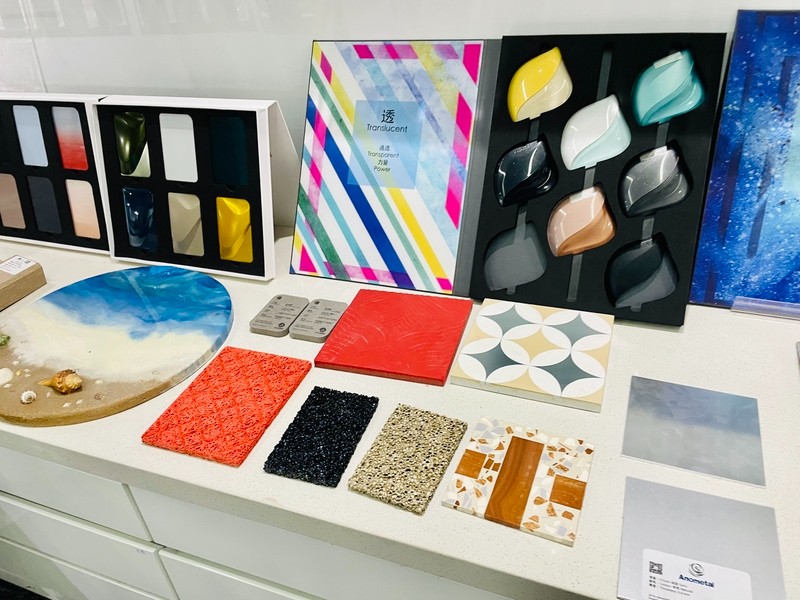
But who will apply these new materials to People's Daily lives?
Chen Dandan, the founder of the material, told reporters: "At present, many recycled materials have strong functionality, aesthetics and multi-scene application, but there is also a bridge between the material and the product landing scheme."
Chen Dandan, a former architect in the field of architecture, found that in the construction industry, most designers have a traditional understanding of materials, and few are able to create designs from a sustainable perspective, relying on the different characteristics of environmentally friendly materials.
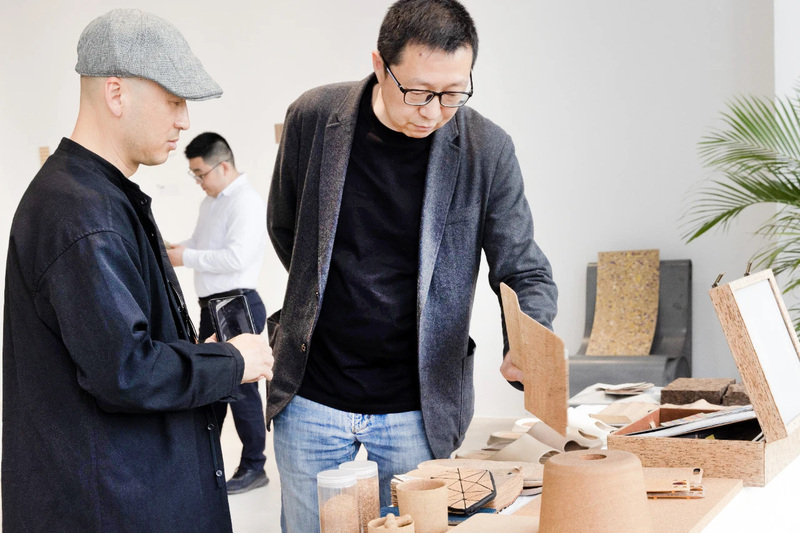
As a result, she decided to create the sustainable materials brand "Jiami", a sustainable materials platform for the construction sector that not only allows designers to learn more about sustainable materials, but also provides a showcase for recycled materials companies.
Chen Dandan told reporters that in early July, Vanke's latest project in Shanghai will use the grass board made of plant straw as a building decoration material, this new material is not only low carbon environmental protection, beautiful and good-looking, but also has a unique fragrance with its material characteristics. "Material" as a designer to participate in the whole project landing.
"At present, the recycling of domestic waste has been relatively good into the public vision, but in the field of architecture, designers are still more concerned about the level of appearance, novelty and Internet celebrity index." Chen Dandan said.
In fact, if designers themselves lack the understanding of sustainable concepts and sustainable materials, they will naturally not provide sustainable options for customers, so it is difficult to form green loops in the construction field, and it is difficult to develop as upstream recycled building materials.

Application case of biological brick building
Chen Dandan told reporters that unlike daily consumer goods, the life cycle of the building itself is longer, and the total amount of various resources used is also more. If designers can fully consider the problem of recycling in the design and construction, then the waste of resources in the architectural design will be greatly reduced.
Therefore, design is an important part of shortening the regeneration cycle. Chen Dandan believes that whether it is industrial product design or architectural design, only by providing sustainable solutions when the demand is generated can each subsequent link reduce the reuse cost and shorten the reuse cycle.
Chen Dandan said, for example, in the sustainable store program provided by "material" for a chain brand, whether the construction material is convenient to dismantle and can be reused is regarded as an important indicator. In this scheme, the decorative materials of a single store can be reused continuously. The brand side has achieved a win-win situation of social and economic benefits.
Currently, in the construction industry, there are not many examples of overall renovation through sustainable design thinking. 3rlabs is one example.
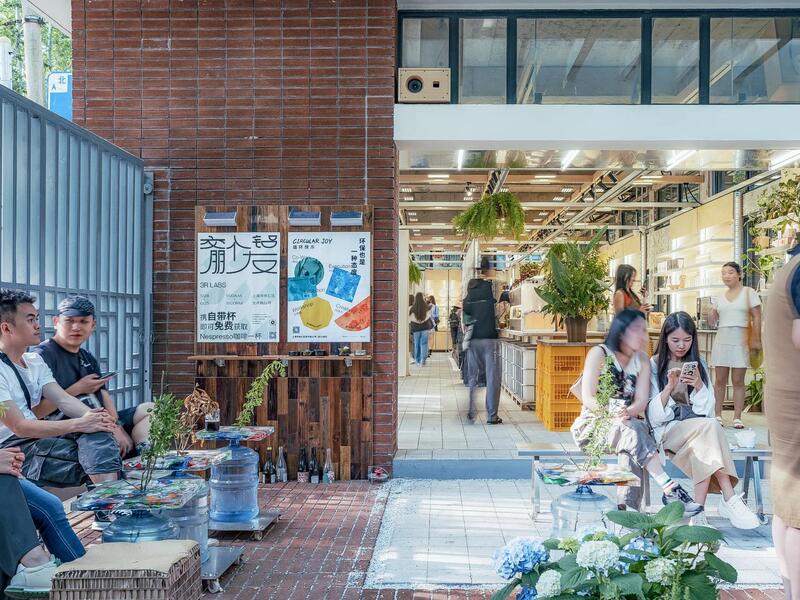
Paul, who designs sustainable stores for 3rlabs, believes that sustainable space design includes two levels: one is the material itself has sustainable properties, such as floor tiles, wood, cans, recycled plastics, etc. Another is the sustainability of materials in use, for example, the space has no fixed display point, nor fixed partition wall, and the activity props can also be flexibly changed and assembled, which will reduce the material loss when the space is updated.
sissy, the founder of Plastic Cure, has a similar view. She believes that design innovation can not only shorten the regeneration cycle, but also arouse the demand for green consumption to a greater extent. "In the market, traditional recycled plastics are mainly imitation of traditional materials, and Suyu has made a bold attempt to make completely different patterns and textures into the green label of the product."
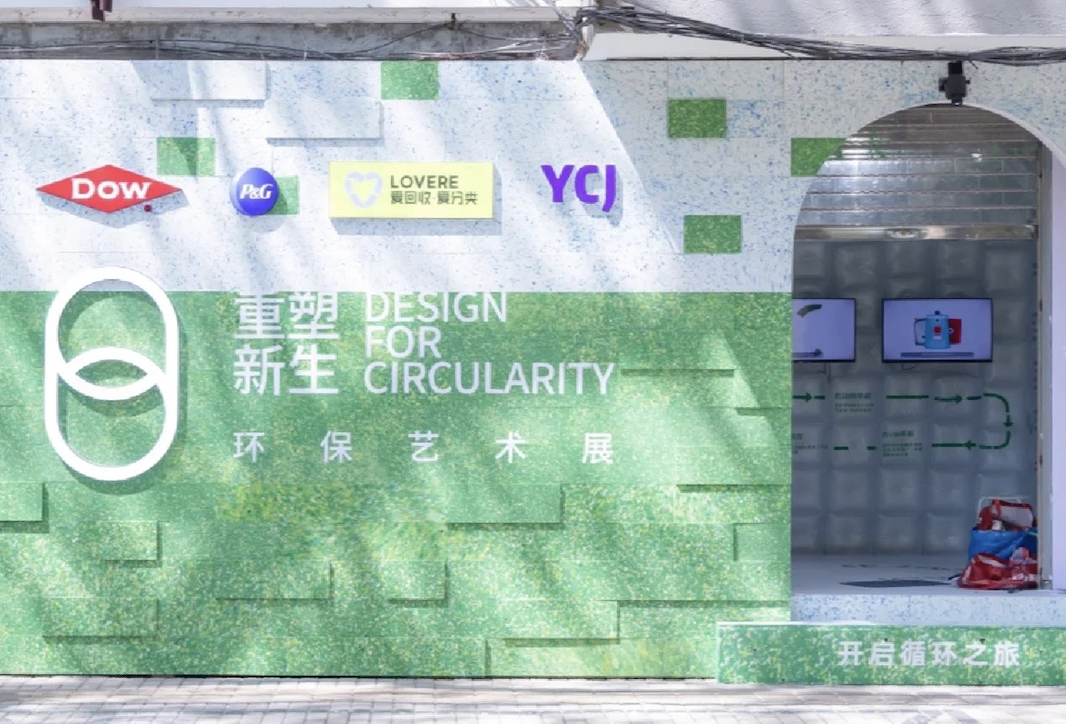
The exterior walls are decorated with recycled plastic
The recycled plastic sheet from the research and development project to the production and use, after a full two years of time, this process not only requires engineers to break through technical problems, but also requires designers to grasp the trend in the process basis, design and innovation of products.
"When consumers are first surprised when they see it and have a desire to understand it, the concept of green consumption will quietly enter their hearts." "sissy said.
Circular economy is like a circle, from design to production, from consumption to recycling, every node is linked, and the weakness of any link will be reflected in the entire industrial chain.
When more and more consumers and sustainable brands start to think in terms of "recycling", the way production and design will change, the way waste is collected and reused will change, and this "fashion" will also bring benefits to the entire green economy chain.
[Expert pulse] Garbage classification 2.0: towards refinement and scenization
Liberation Monday: Recently, you and your team released the "Research Report on the construction of disposable paper Cup recycling System after consumption", do you have any new findings?
Du Huanzheng (Director of the Institute of Ecological Civilization and Circular Economy, Tongji University) : For an international metropolis like Shanghai, we can't underestimate the "subdivision field" of waste. In fact, there are a large number of occasions in the city that need to use disposable paper cups, they often appear together with coffee and milk tea, and such disposable consumables account for nearly 60% of the increase in Shanghai's garbage.
The study found that paper cup recycling has good carbon reduction potential, with 68% carbon reduction achieved per cycle. Moreover, its recycled products have broad market prospects. Through the recycling of items closely related to our lives, consumers can be subtly driven to participate in garbage classification and green product purchase. Focus from a small point of view and start from a small point of view, which may become an opportunity to promote the refinement of garbage classification.
However, for such waste as disposable paper cups, the response at the recycling end needs to be strengthened. The refinement of garbage classification not only requires a change in people's ideas, but also requires the convenience of infrastructure. In addition, for "minority" waste, it is more necessary to scale social recycling, and it is necessary to simplify the recycling process through technological innovation, and balance the recycling efficiency and recycling costs.
At present, the garbage classification should gradually transition from 1.0 to 2.0, that is, the fine classification stage, which requires the targeted resource of the classified products, divided into categories, steps, and scenes, and the construction of a cyclic system of each type of product. Since then, the resource utilization of waste such as disposable paper cups and disposable plastic packaging boxes can be gradually promoted.
The key to developing a circular economy is to build a closed loop of material production, consumption and recycling. In your opinion, what is the key to forming a "closed loop"?
Du Huanzheng: First of all, renewable resources have the attributes of quasi-public goods, which need the support and management of government policies, and make up for the missing parts of the value chain through preferential policies and management system innovation.
Secondly, the development of resource recycling industry cannot be separated from technological innovation. Front-end sorting and high-value utilization of the end need to rely on technological innovation to promote the application of conventional technology and the development of disruptive technology.
In addition, there must be a "run through" business model. On the one hand, front-end recycling and disposal costs should be reduced through education, innovation of recycling models, and empowerment of big data. On the other hand, it is to improve the added value of the end, such as through the brand premium, the design premium, to achieve high value utilization.
On these basis, to promote the construction of a closed-loop system of policy + technology + business model coordination, in order to provide local governments and brand enterprises with classified and scenario-specific waste system solutions, and help create a waste-free city and a circular city.
Liberation Monday: At present, is the consumer's recognition of recycled products high? How to increase consumer awareness, interest and demand for remanufactured products?
Du Huanzheng: In recent years, the public's recognition of recycled products is gradually improving. Whether it is the green consumption season of Shanghai's May 5 Shopping Festival, or the attention of many consumer goods companies to resource recycling, green consumption is becoming a new trend of the whole people.
In the future, it is necessary to continue to enhance consumer awareness, interest and demand for remanufactured products. On the one hand, it is still necessary to strengthen publicity and education and continue to promote the concept of sustainable living. Let the government, recycling enterprises, social organizations, etc. continue to deliver the "new fashion" of sustainable life, starting from the key groups, and driving more target consumer groups. On the other hand, the industry itself should continue to improve the quality of recycled products, establish a complete set of recycled products research and development, traceability, testing, certification system as soon as possible, strengthen cooperation with universities and research institutes, and jointly "empower" the circular economy.
Previous:Zhong Huining: Research progre...
Next:Recycled plastics industry sta...